
How We Support Partners From Development Through Scale-Up
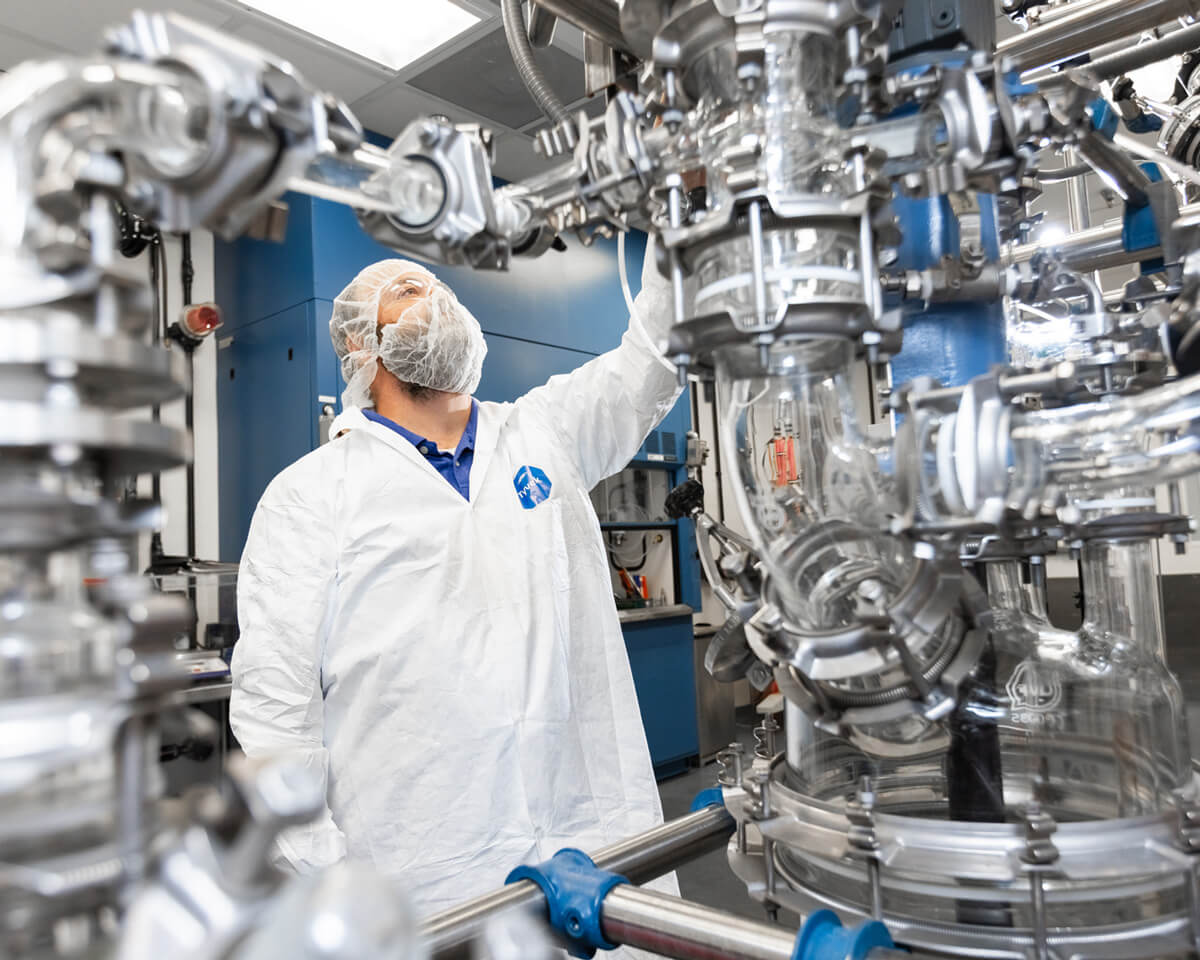
Our teams work closely with partners at every stage of development, from early process optimization through pilot demonstrations, large-scale manufacturing, and process characterization. In this video, Ryan Odom (Sr. Scientist II) highlights how we collaborate in the lab and on the manufacturing floor to ensure a smooth path from concept to production.

Why PEG and Conjugation Strategies Matter in Modern Therapeutics
PEGylation chemistry and polymer conjugation play a pivotal role in improving a molecule’s performance. By attaching a tailored polymer to a protein, peptide, or small molecule, developers can influence solubility, circulation time, immunogenicity, and manufacturability. Selecting the optimal polymer structure and chemistry is essential, and Gannet BioChem’s experience helps teams make these decisions with clarity, confidence, and efficiency.
What You Can Expect When You Partner With Gannet BioChem
Our PEG chemistry and bioconjugation programs are built on experience, scientific rigor, and close collaboration. When you work with our team, you can expect:
Guidance
in selecting the right PEG structure, molecular weight, functional group, and conjugation strategy
High-purity Polymers
reagents supported by decades of analytical insight and impurity control
End-to-end
support from early R&D through GLP conjugation and cGMP reagent production
Solutions
for challenging purification tasks, including isolation of conjugates with the desired degree of conjugation
Clear communication
and continuity from development through tech transfer and scale-up
Reliable delivery
backed by a long-standing quality system and strong audit history
PEG Reagents Designed for Therapeutic Performance
Gannet BioChem has extensive experience developing PEG reagents that meet demanding purity, performance, and scalability requirements.
The PEG structures we work with include:
- Linear (mono-, di-, or heterofunctional), branched, multi-arm (4-arm and 8-arm), and forked PEGs
- Molecular weights ranging from <500 Da to ~60 kDa
- Functional groups such as active esters, carbonates, aldehydes, amines, thiols, maleimides, lipids, and releasable linkages

Custom PEG Architecture and Reagent Design
Many therapeutic challenges require PEG solutions that can’t be found in a catalog. Our team helps clients choose the right architecture, molecular weight, and reactive group, and we draw on decades of experience controlling impurities and optimizing manufacturability. This history, combined with our background in both catalog and custom synthesis, allows us to adapt PEG design to the specific goals of each program.
Bioconjugation Support for Proteins, Peptides, and Small Molecules
Our bioconjugation services help partners create polymer-drug conjugates with the right profile for their therapeutic goals. We support a wide range of biomolecules and modalities and have the most hands-on experience conjugating PEGs and other polymers to proteins and small molecules. Our team works with clients to evaluate molecular targets, available functional groups, and desired conjugate attributes to guide conjugation strategy and development.
Representative chemistries include:
- NHS ester and carbonate conjugation to amine groups (e.g., lysines)
- Maleimide conjugation to thiols (e.g., cysteines)
- Aldehyde conjugation to N-terminus groups, with emphasis on monoconjugates
Analytical Capabilities That Bring
Clarity to Every Step
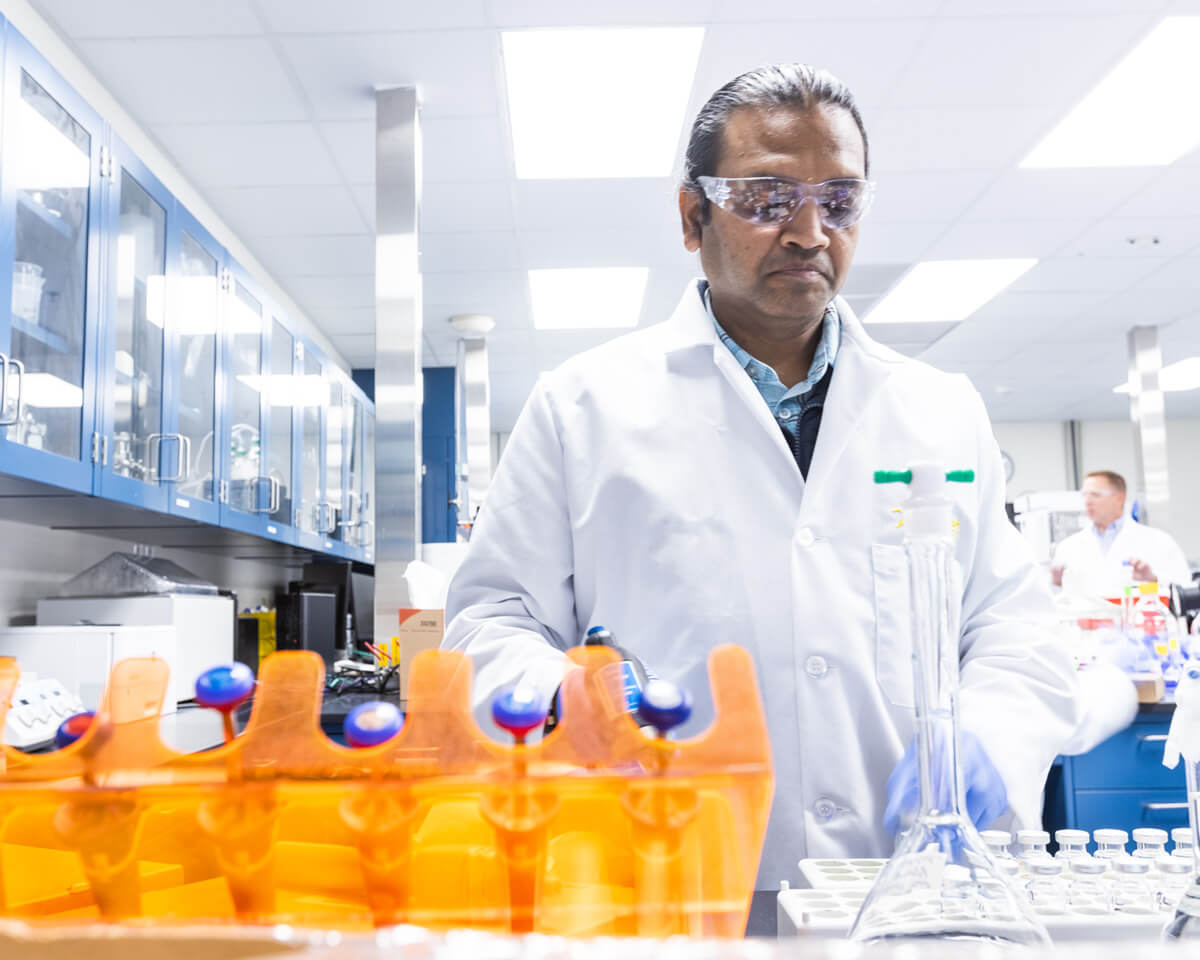
Accurate, timely analytical insights are essential for successful PEG reagent development and bioconjugation. Our analytical and development teams work to monitor reactions, refine purification strategies, and ensure every material meets the specifications needed for downstream success. With advanced chromatography systems, in-process monitoring tools, and a deep understanding of polymer behavior, we help partners reduce uncertainty and move through development more efficiently.
